🕷️ Fireflies: how bioluminescence works
🧾 Quick Facts
Fireflies, also known as lightning bugs, are famous for their bioluminescence—the remarkable ability to produce light. These fascinating insects belong to the beetle family and vary widely across regions.
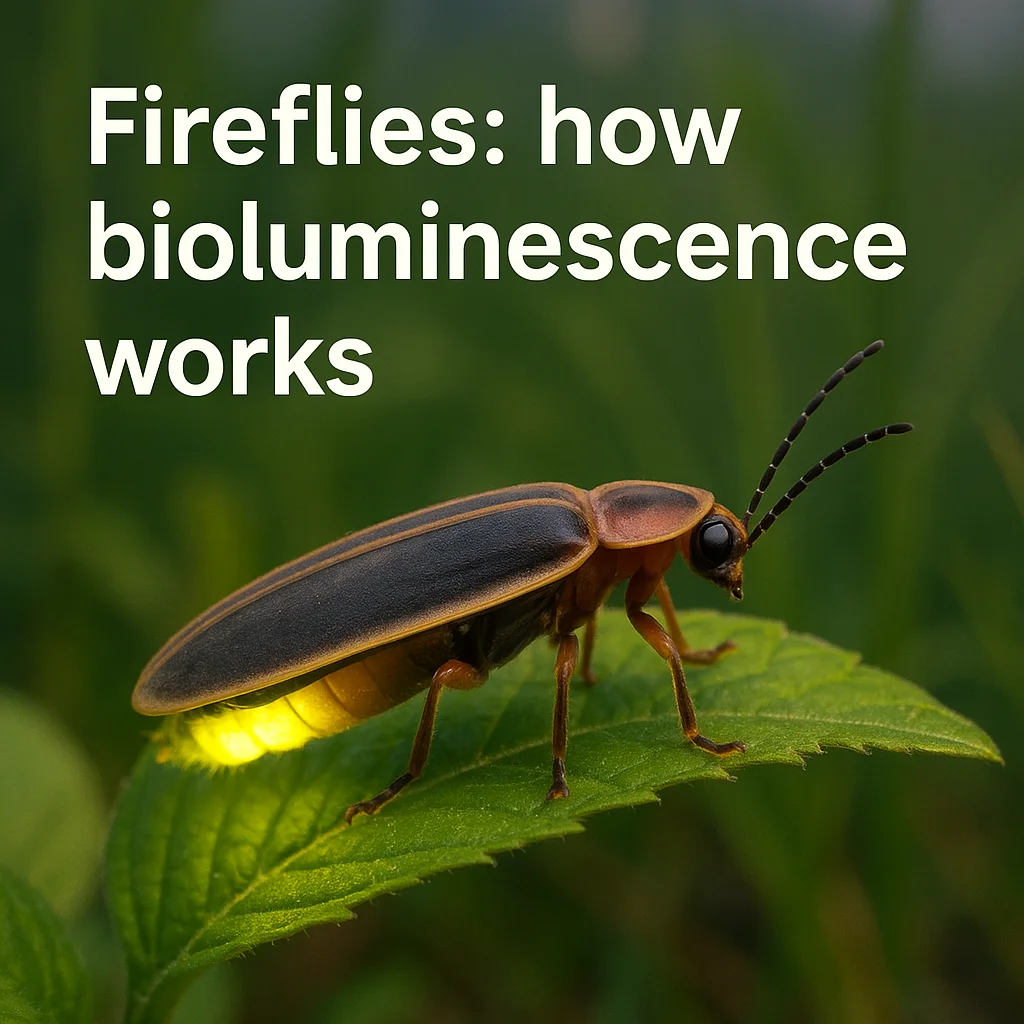
- Common names: Fireflies, lightning bugs
- Scientific name: Varies by species
- Insect or not: Yes, they are insects, members of the order Coleoptera
- Order / family: Coleoptera / Lampyridae
- Typical size range (adult): 5 to 25 mm
- Key colors/patterns: Brown to black with pale markings; often with a soft glow from their light organs
- Activity: Primarily nocturnal
- Typical habitats: Forests, wetlands, grasslands, gardens
- Where in the world it occurs: Global; most common in tropical and temperate regions
- Seasonality: Most visible in warm months, varies by region
🔍 Identification
Recognizing fireflies involves understanding their distinct characteristics. Their small, beetle-like shape includes a soft, flat body and distinct wing coverings called elytra. Their antennae are typically feathery or thread-like, aiding in chemical detection. These beetles have soft flight patterns with easily visible alternating flashes, which help distinguish them from other insects.
Their legs are long and adapted for walking on various surfaces. In areas with multiple species, one might confuse them with non-bioluminescent beetles or other luminous insects. Notably, fireflies are harmless and have no direct impact on humans.
- Elongated, soft body shape
- Thread-like or feathery antennae
- Soft wing covers (elytra)
- Smooth, controlled movement style
- Distinct flashing patterns at night
- Often seen in groups during warm, humid evenings
🧠 Basic Body Structure
Fireflies are invertebrates, meaning they do not possess a backbone. Their body is divided into three major parts: the head, thorax, and abdomen. Like all insects, they have a hard external skeleton called an exoskeleton, providing protection and support. Fireflies have six legs attached to their thorax and wings suited for flight.
Most firefly species undergo molting as they grow, shedding their exoskeleton to allow for a larger one. The wing coverings, known as elytra, shield the delicate hind wings utilized for flight. Fireflies are beetles, making them members of the largest order of insects, Coleoptera.
🌍 Habitat & Distribution
Fireflies are most frequently found in warm, humid environments. Typical habitats include forests, grasslands, wetlands, and gardens, where there is sufficient moisture. They often take shelter in leaf litter and under tree bark or stones during the day.
Geographically, fireflies are present on every continent except Antarctica. They thrive in tropical and temperate climates, where moist conditions support their breeding and life cycle. The destruction of natural habitats for urban development reduces the number of fireflies observed in some areas.
📅 Seasonal Appearance & Activity
Fireflies are typically seen during warm months when humidity is high. They are primarily active in the evening and nighttime hours. Their presence is most notable after heavy rainfall or during high humidity, which enhances their flashing displays.
- Warm, humid evenings are ideal
- Often observed from spring to summer
- Visible on calm, clear nights
- After recent rainfall increases visibility
🥚 Reproduction & Egg-Laying
Firefly mating involves complex bioluminescent communication. Males emit characteristic light flashes to attract females, who signal in response. This bioluminescent courtship varies across different species, allowing individuals to recognize potential mates.
Females deposit eggs in moist soil, leaf litter, or beneath bark. Egg numbers can vary widely, though precise counts depend on the species and environmental conditions. After eggs hatch, the larvae remain hidden and feed on available food sources.
🌀 Metamorphosis & Life Cycle
Fireflies experience complete metamorphosis, encompassing four stages: egg, larva, pupa, and adult. Upon hatching, larvae are predatory, consuming soft-bodied insects and snails. They inhabit moist soil and leaf litter, where they develop over several weeks or months.
The pupal stage occurs within a protective case, where transformation into an adult occurs. This stage varies in duration. Adult fireflies, with glowing abdomens, emerge to participate in mating and spreading their species. Adult lifespan is brief, lasting several weeks to a few months.
🍽️ Diet & Feeding Behavior
Larvae are carnivorous, using sharp mandibles to consume insects, worms, and other soft-bodied organisms. The adults of some species are known for nectar or pollen feeding, though others may not consume food. They rely on bioluminescence to locate and communicate with mates rather than seeking prey.
Fireflies are generally predators in their early stages, contributing to the control of pest populations within their environments.
🦉 Predators & Defense
Fireflies face predation from birds, reptiles, amphibians, spiders, and mammals. Their primary defense mechanism is their bioluminescent abdomen, which can serve to startle predators or warn of toxicity. Some species produce chemical deterrents that make them unpalatable to birds and other animals.
- Bioluminescence serves as a warning signal
- Produces chemical toxins
- Camouflage during the day in leaf litter
- Startle displays deter predators
👥 Social Behavior & Swarms
Fireflies are generally solitary but gather in noticeable numbers during peak mating season. This occasional congregation results in captivating displays known as "light shows." The light displays are specific courtship behaviors rather than social cooperation.
Swarms of fireflies occur under ideal conditions, providing spectacular natural spectacles that inspire awe and fascination among onlookers.
🧭 Senses & Communication
Fireflies communicate using bioluminescence, produced through a chemical reaction in their abdomen. This light is used during mating to attract partners. They possess keen eyesight, allowing them to respond to the light signals of other fireflies. Olfactory senses help them to identify pheromones released by potential mates.
While sensitive to vibrations and touch, fireflies primarily rely on visual and chemical cues for interaction and survival.
🌱 Role in the Ecosystem
Fireflies play a vital role in controlling pest populations, as their larvae consume a range of insects. They contribute to the food web, serving as prey to animals that have adapted to tolerate their chemical defenses.
Their presence indicates healthy ecosystems, and their decline can signal environmental degradation. Fireflies also inspire interest and conservation efforts due to their enchanting light displays.
📉 Population & Conservation Notes
Fireflies are often reported as common in suitable habitats, though some populations face threats from habitat loss, pesticide use, and light pollution. Local abundance can vary, with declines noted in areas experiencing significant urban development and agricultural expansion.
- Plant native flora to support natural habitats
- Minimize pesticide use in gardens
- Preserve natural leaf litter
- Reduce artificial lighting at night
⚠️ Human Interaction & Safety
Fireflies do not bite or sting and are considered harmless to humans. Observing fireflies offers an opportunity to appreciate nature without interference or collecting specimens. Leaving them undisturbed preserves their role in the ecosystem and ensures continued enjoyment for future generations.
For any severe reactions to encounters with insects in general, professional advice should be sought.
📌 Summary
- Beetle family with bioluminescent abilities
- Prefer warm, humid habitats globally
- Active during summer evenings
- Complete metamorphosis: egg, larva, pupa, adult
- Larvae consume pests, control populations
- Predators include birds, amphibians, spiders
- Role as natural indicators of ecosystem health
- Safe interaction encourages ecological awareness