🕷️ Burying Beetles Parenting Behavior On A Carcass
🧾 Quick Facts
Burying beetles, also known as sexton beetles, are fascinating insects noted for their unique parenting behavior, particularly on animal carcasses. They belong to the family Silphidae within the order Coleoptera and are primarily known for their remarkable interactions with dead animals.
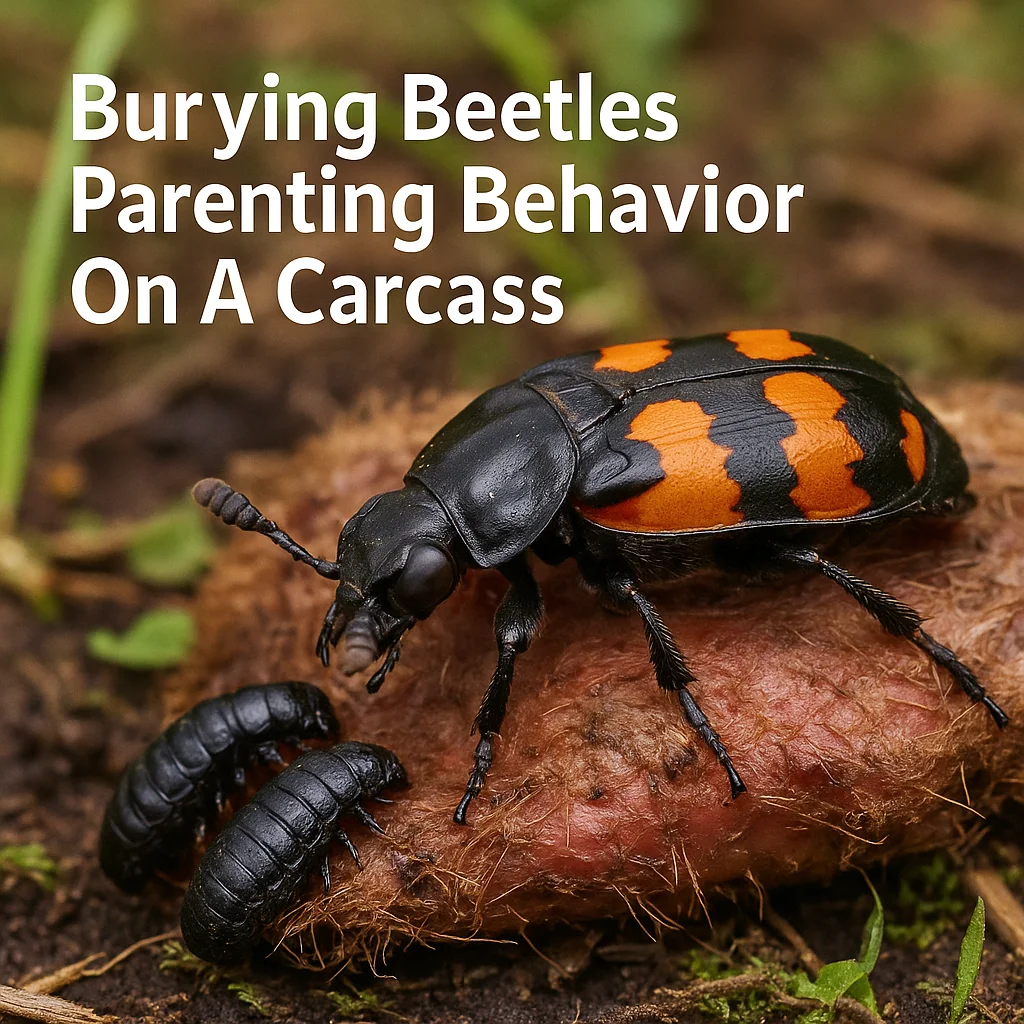
- Common names: Burying beetles, Sexton beetles
- Scientific name: Nicrophorus species (varies)
- Insect or not: Yes, they are insects, which are invertebrates
- Order / family: Coleoptera / Silphidae
- Typical size range: 12 to 25 mm (0.5 to 1 inch)
- Key colors/patterns: Black and orange, red, or yellow markings
- Activity: Mainly nocturnal
- Typical habitats: Forests, grasslands, and other areas with abundant small vertebrate wildlife
- Where in the world it occurs: Mainly found in North America, Europe, and Asia
- Seasonality: Most active in spring and summer
🔍 Identification
Burying beetles can be identified by their distinctive body shape, coloration, and behavior. These beetles have a robust, oval body with short, clubbed antennae. Their elytra cover their abdomen almost entirely, often showcasing unique color patterns.
- Body shape: Oval and robust with a flattened appearance
- Antennae type: Short, clubbed antennae, often ending in a knob
- Wing features: Strong elytra that cover most of the abdomen
- Leg traits and movement style: Strong legs adapted for digging
- Distinguishing look-alikes: Other beetles like carabid beetles, but burying beetles have distinctive coloring and size
- Top ID Tips:
- Look for vibrant red, orange, or yellow markings on a black body
- Note their large size relative to other beetles in their habitat
- Observe their digging behavior around carcasses
- Check for the presence of mites, which are often found on burying beetles
- Antennae with noticeable clubs
🧠 Basic Body Structure
Like all insects, burying beetles have a body divided into three main parts: head, thorax, and abdomen. They possess six legs and two antennae. Burying beetles are invertebrates, meaning they lack a backbone but have a tough exoskeleton that provides protection and support. Molting allows them to grow, particularly during their larval stages.
🌍 Habitat & Distribution
Burying beetles prefer environments rich in small vertebrate wildlife, which provide ample resources for their breeding behavior. Common habitats include forests, grasslands, and occasionally urban parks. They utilize microhabitats such as leaf litter or under logs to find carcasses to bury. These insects are widespread across North America, Europe, and parts of Asia, with local populations adapted to climates from temperate to boreal regions. Habitat destruction or changes, such as urbanization, may influence their visibility and distribution.
📅 Seasonal Appearance & Activity
Adult burying beetles are most active from spring through late summer when temperatures favor their breeding activities. Being largely nocturnal, they can be spotted during dusk or at night, especially during warm, humid conditions that bring out the odors necessary for locating carcasses.
- Best Time to Spot It:
- Spring evenings just after sunset
- During warm summer nights
- After rainfalls when humidity is high
- In areas with abundant wildlife activity
🥚 Reproduction & Egg-Laying
Mating often involves intricate courtship behaviors, sometimes including pheromones and physical displays. Burying beetles exhibit a unique reproductive strategy by laying their eggs on or near a small carcass, which will be entombed underground as a food source for their larvae. Females can lay dozens of eggs, depending on the carcass size and environmental conditions.
🌀 Metamorphosis & Life Cycle
Burying beetles undergo complete metamorphosis, transitioning through life stages from egg to larva to pupa to adult. Eggs hatch into larvae that feed on the preserved carcass, growing rapidly over a couple of weeks. Larvae pupate in the soil nearby, emerging as adults after a few weeks, although the timing can vary based on environmental conditions.
🍽️ Diet & Feeding Behavior
These beetles are primarily scavengers. As adults, they seek out and consume small animal carcasses. Their mandibles allow for effective feeding and preparing carcasses for their offspring. Larvae also feed on the decomposing flesh, which is prepared by the parents, demonstrating a cooperative feeding strategy.
🦉 Predators & Defense
Burying beetles face predation from birds, mammals, and sometimes reptiles. Their primary defense includes their chemical secretions, which can deter some predators. They also use camouflage amidst leaf litter to avoid detection.
- Defense Highlights:
- Chemical secretion with a foul odor
- Camouflage within their natural habitat
- Strong mandibles for defense
- Rapid retreat into burrows or under debris
👥 Social Behavior & Swarms
Burying beetles are generally solitary but display strong cooperative behavior during reproduction. Both male and female parents participate in carcass preparation and larval care. This social cooperation is unique among beetles, as it ensures the successful development of their offspring.
🧭 Senses & Communication
Burying beetles have a keen sense of smell, which they use to locate carcasses from afar. They can detect odors in the air using specialized antennae sensitive to chemical cues. Communication largely relies on pheromones released during mating and carcass preparation.
🌱 Role in the Ecosystem
Burying beetles play a critical role as decomposers in ecosystems by recycling nutrients from carrion back into the soil. This activity helps to control natural debris in habitats and supports nutrient cycling. Their presence indicates healthy environments rich in biodiversity.
📉 Population & Conservation Notes
While some species of burying beetles are considered common, others, like the American burying beetle, are threatened due to habitat loss and ecological changes. Conservation efforts focus on protecting natural habitats and ensuring the availability of carcass resources for breeding.
- How to Help (Low-Impact):
- Preserve natural leaf litter and forest debris
- Reduce pesticide use in gardens and parks
- Support local wildlife conservation initiatives
- Maintain diverse habitats
⚠️ Human Interaction & Safety
Burying beetles do not pose any significant threat to humans. They do not bite or sting but are best observed respectfully. Their ecological role makes them beneficial, and it is crucial not to disturb them during their activities.
📌 Summary
- Distinctive coloration with orange, red, or yellow patterns
- Primarily found in forested and grassland regions
- Most active in the evening during spring and summer months
- Exhibits complete metamorphosis and cooperative breeding behavior
- Diet consists mainly of small animal carcasses
- Predators include birds, mammals, and reptiles
- Essential decomposers in their ecosystems, aiding nutrient cycling
- Some species are facing population declines due to habitat loss
- Safe for human interaction; respect their ecological niche