🕷️ Asian Lady Beetle: ID and Home Invasion Tips
🧾 Quick Facts
The Asian Lady Beetle, a well-known member of the Coccinellidae family, is a common sight in many parts of the world. This beetle is recognized for its striking appearance and its impact on both natural ecosystems and human environments.
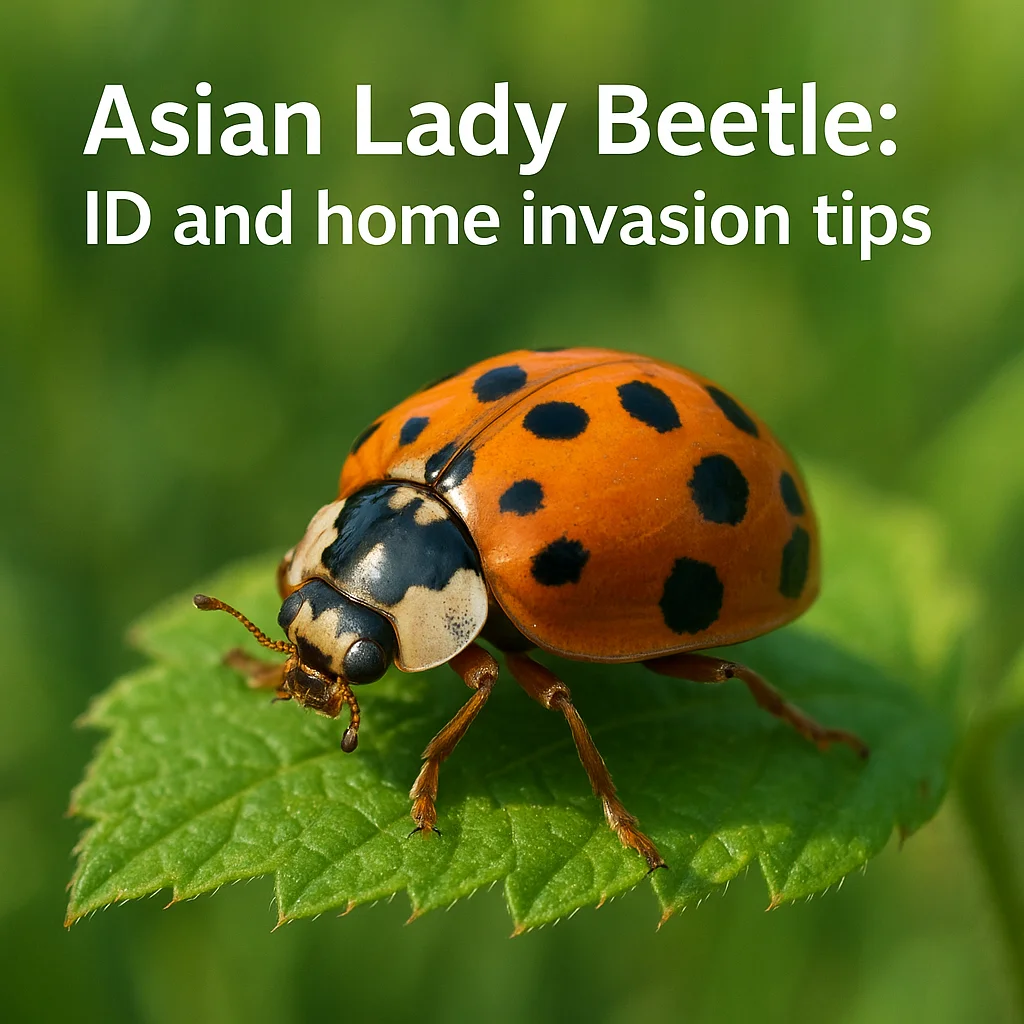
- Common names: Asian Lady Beetle, Harlequin Ladybird, Multicolored Asian Lady Beetle
- Scientific name: Harmonia axyridis
- Insect or not: Yes, it is an insect (a small arthropod)
- Order / Family: Coleoptera / Coccinellidae
- Typical size range: 5-8 mm in length
- Key colors/patterns: Variable; commonly red/orange with black spots
- Activity: Diurnal
- Typical habitats: Gardens, fields, forests, urban areas
- Where in the world it occurs: Originally from Asia, now found in North America and Europe
- Seasonality: Most visible in spring and fall
🔍 Identification
The Asian Lady Beetle is distinctly recognized through its domed, oval body shape and a multitude of color variations ranging from yellow to red. Identifying features include its small black spots, though some individuals may lack spots altogether. The pronotum (the area behind the head) often has a characteristic M- or W-shaped marking.
Antennae are short and used primarily for sensing the environment. Its forewings, known as elytra, are hard and cover the hind wings, which are used for flying. The Asian Lady Beetle walks using its six robust legs and is usually observed moving swiftly over surfaces.
When attempting to distinguish the Asian Lady Beetle from other species, it can often be confused with native ladybugs. However, unique characteristics like the M-shaped marking on the pronotum can help in making a correct identification.
- Oval, dome-shaped body
- Pronotum with M or W marking
- Spotted wings, though spots can vary or be absent
- Red to orange coloration is common
- Short antennae and strong legs
- Can be confused with native ladybugs
🧠 Basic Body Structure
Being an insect, the Asian Lady Beetle has three main body parts: the head, thorax, and abdomen. It possesses six legs, which are a key characteristic of insects. Like all insects, it has an exoskeleton that provides support and protection, and it undergoes molting as it grows. The wings (elytra and hind wings) play a crucial role in flight.
This beetle is an invertebrate, meaning it lacks a backbone. Instead, its hard exoskeleton provides the necessary structural support.
🌍 Habitat & Distribution
The Asian Lady Beetle prefers a variety of habitats including lush gardens, agricultural fields, forests, and urban areas. It is particularly common in environments where there is an abundance of aphids, its primary food source. They may reside on plants or under leaves, sometimes seeking shelter in crevices or under loose bark.
Originally from Asia, this beetle has expanded its range significantly, largely due to human activity. It is now widely distributed across North America and parts of Europe. While it can survive a range of climates, it is most populous in temperate zones.
📅 Seasonal Appearance & Activity
The Asian Lady Beetle is most frequently observed during the spring and fall. During these times, it is actively foraging during daylight hours. Its presence is often influenced by the availability of prey and suitable weather conditions. The beetle becomes less active during colder months and seeks overwintering sites.
- Visible in early spring and late fall
- Active during daytime
- Prefers mild, sunny weather
- Less active in extreme cold or heat
- Overwintering often occurs in sheltered locations
🥚 Reproduction & Egg-Laying
Asian Lady Beetles engage in mating during the spring and fall months. Courtship involves the use of tactile cues and possibly pheromones, although specifics may vary. Females lay eggs on the undersides of leaves, particularly those infested with aphids, which provide an immediate food source for emerging larvae.
The number of eggs laid can vary, but clutches typically contain several dozen eggs. These eggs are small and yellow, hatching within a few days under optimal conditions.
🌀 Metamorphosis & Life Cycle
The Asian Lady Beetle undergoes complete metamorphosis, comprising the egg, larva, pupa, and adult stages. After emerging from eggs, larvae are voracious feeders, consuming aphids and other small insects. This larval stage lasts several weeks, depending on temperature and food availability.
Following the larval phase, the beetle enters the pupal stage, during which it undergoes transformation. This stage can last several days to weeks. Once metamorphosis is complete, the adult beetle emerges, ready to feed and reproduce.
🍽️ Diet & Feeding Behavior
At all life stages, the Asian Lady Beetle is primarily predatory, feeding on aphids, scale insects, and other soft-bodied pests. It uses chewing mouthparts to consume its prey. As a beneficial predator, it plays a critical role in natural pest control.
The larvae are especially effective predators due to their high appetite, quickly consuming large numbers of aphids, and making them a valuable ally in pest management within gardens and agricultural fields.
🦉 Predators & Defense
Asian Lady Beetles have several natural enemies, including birds, spiders, and wasps. To defend themselves, they may exude a yellowish fluid from their leg joints that can deter predators. This defensive fluid is not harmful but can be unpleasantly scented and can stain surfaces.
Their colorful patterns also serve as warning signals, a form of mimicry that indicates their distastefulness to potential predators.
- Exudes chemical defense fluid
- Warning coloration deters predators
- Fast flyers to evade threats
- Can hide in small crevices
👥 Social Behavior & Swarms
Asian Lady Beetles are generally solitary, but they exhibit remarkable behavior when swarming to find overwintering sites. This is triggered by colder temperatures in the fall when large groups of beetles can be seen clustering together on warm, sunlit surfaces or inside buildings.
While the swarming can be a nuisance, it is a natural behavior aimed at ensuring survival during the winter months.
🧭 Senses & Communication
The Asian Lady Beetle relies on a combination of vision, smell, and touch for navigation and finding food. It uses its compound eyes to detect movement and colors, which are crucial for spotting aphid colonies.
Pheromones play a role in communication, especially during aggregation for overwintering, where a combination of pheromones and environmental cues draw beetles together.
🌱 Role in the Ecosystem
Ecologically, the Asian Lady Beetle is a vital predator controlling aphid populations and thus contributing to plant health. By reducing aphid numbers, they help maintain ecological balance and protect crops.
However, as a non-native species in regions like North America, their introduction has also led to competition with native ladybug species, sometimes resulting in declines of local populations.
📉 Population & Conservation Notes
The Asian Lady Beetle is generally considered common and widespread, thanks to its adaptability and reproduction strategies. In some areas, it has become so abundant that it is classified as an invasive species, posing challenges to native biodiversity.
Factors affecting its population include habitat availability, climate conditions, and human influences such as pesticide use.
- Plant native flowers and shrubs
- Limit pesticide use to protect beneficial insects
- Provide overwintering habitats like leaf piles
- Monitor and support native insect populations
⚠️ Human Interaction & Safety
While Asian Lady Beetles can bite if handled, these bites are benign, causing only minor irritation. If bitten, washing the area and avoiding scratching is general advice. In rare cases of severe reactions, professional medical advice should be sought.
Best practices for human interaction involve observing these beetles respectfully and not disturbing or collecting them from their natural habitats.
📌 Summary
- Dome-shaped, often colorful, predator of aphids
- Common in gardens and fields, active in spring and fall
- Undergoes complete metamorphosis with four life stages
- Important in pest control, but can outcompete native species
- Defends with chemical secretions and warning colors
- Forms swarms in fall seeking overwintering sites
- Populations are generally stable though considered invasive in some regions
- Human interaction suggests minimal risk; observe respectfully