🕷️ Wasp nests: types and where they form
🧾 Quick Facts
Wasp nests are marvels of natural engineering, crafted by various species of wasps. These nests can differ greatly in size, shape, and location depending on the type of wasp that builds them. Understanding these nests' characteristics not only helps in identifying the wasp species but also helps in understanding their behaviors and ecological roles.
- Common names: Paper wasps, yellowjackets, hornets
- Scientific name: Varies by species
- Insect or not: Insects (six-legged invertebrates)
- Order: Hymenoptera; Family: Vespidae
- Typical size range (adult): 1-3 cm in length, varies by species
- Key colors/patterns: Yellow, black, brown, metallic blue
- Activity: Primarily diurnal
- Typical habitats: Forests, gardens, urban areas
- Where in the world it occurs: Global, except extremely cold regions
- Seasonality: Most visible during warmer months
🔍 Identification
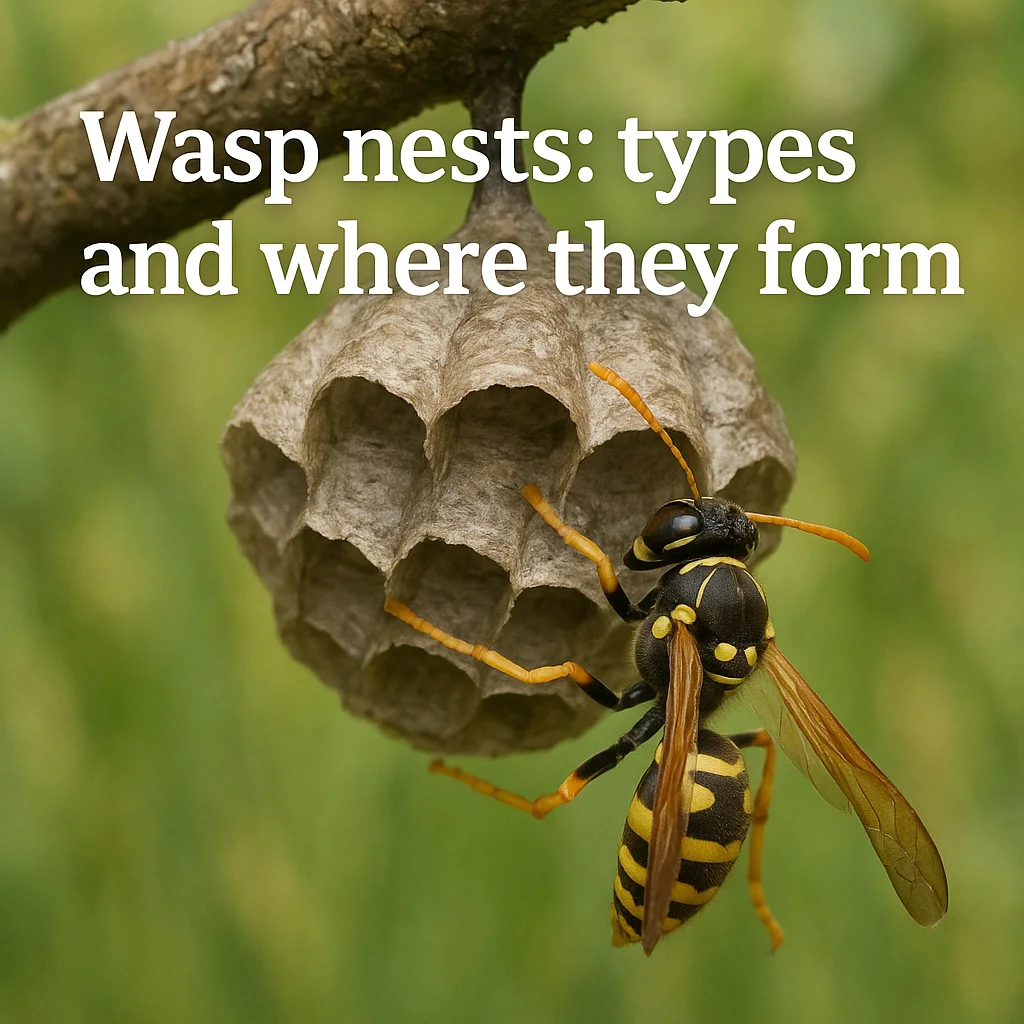
Identifying a wasp nest starts with recognizing its builders: the wasps themselves. Wasps have an elongated body shape with a narrow waist connecting the thorax and abdomen. Their antennae are usually straight and filiform, distinguishing them from the more curved antennae of bees. Wings, when folded, lie along the body, and the legs are slender, often seen hanging during flight. Wasp nests are frequently confused with bee hives; however, wasp nests generally have a paper-like texture and are not filled with honey.
- Top ID Tips:
- Look for a papery, umbrella-shaped nest hanging from eaves or branches
- Identify the narrow waist on flying insects nearby
- Observe for varied colors, often black and yellow or metallic hues
- Check for open cells in nests, often visible
- Note diurnal activity, especially on warm, sunny days
- Distinguish from honey bee hives by the absence of waxy brood cells
🧠 Basic Body Structure
Wasps have a body divided into three main parts: the head, thorax, and abdomen. Each wasp has six legs attached to the thorax, which also bears the wings. The lightweight exoskeleton provides support and protection, facilitating mobility and flight. Molting occurs as they develop from larval stages into adults. Wasps are invertebrates, meaning they lack a spine, unlike vertebrates.
🌍 Habitat & Distribution
Wasps inhabit a wide range of environments that provide access to food and shelter. They prefer warm climates and are commonly found in forests, grasslands, urban gardens, and rural areas. Within these environments, wasps build nests in sheltered locations like under leaves, tree branches, attics, or roof eaves. Their geographic distribution spans all continents except for Antarctica, with the highest activity in temperate and tropical regions. The decline in natural habitats due to urbanization can often concentrate wasp populations in gardens and residential areas.
📅 Seasonal Appearance & Activity
Wasps are most active during spring and summer months when temperatures are conducive to their foraging and reproductive activities. They are diurnal creatures, with most species being highly active during the day. Weather conditions such as temperature and humidity directly influence wasp activity, with cooler temperatures reducing movement. Rainy conditions often drive them to seek shelter within the nest.
- Best Time to Spot It:
- Spring through late summer
- Warm, sunny days
- Early morning and late afternoon
- Dry conditions with low wind
🥚 Reproduction & Egg-Laying
Wasp reproduction involves complex behaviors. Female wasps typically mate only once but store sperm to use for multiple egg-laying periods throughout their life. Eggs are often laid within the cells of the nest. A nest can house dozens to hundreds of eggs at any given time. Females can decide the sex of the offspring; unfertilized eggs develop into males, while fertilized eggs become females.
🌀 Metamorphosis & Life Cycle
Wasps undergo complete metamorphosis comprising four stages: egg, larva, pupa, and adult. Eggs hatch into larvae which are fed by adult wasps. Larvae feed voraciously and moult several times before spinning a cocoon to become pupae. The pupal stage lasts for several days to weeks before emerging as adult wasps. This process varies in length depending on the species and environmental conditions.
🍽️ Diet & Feeding Behavior
The diet of wasps depends on their life stage and species. Adult wasps often feed on nectar and fruit juices while larvae are fed protein-rich foods like other insects, provided by adult wasps. Wasps have chewing mouthparts well-suited for managing a varied diet. They play roles as predators and scavengers, helping control pest populations, and some species also have minor pollinator roles.
🦉 Predators & Defense
Wasps face numerous predators, including birds, reptiles, amphibians, spiders, and larger insects. Defense strategies include their characteristic stings, which can deliver venom as a deterrent. Some species exhibit warning coloration, and others may form swarms to protect the nest. Startle displays and fast flights also assist in escaping threats.
- Defense Highlights:
- Venomous sting for predator deterrence
- Bright warning coloration
- Ability to swarm and confront threats collectively
- Startle tactics and rapid flight
👥 Social Behavior & Swarms
Many wasps are social creatures, living in colonies with structured roles. The queen is the primary egg-laying individual, while workers forage and maintain the nest. Communication within the colony is achieved through pheromones, which help coordinate activities and identify threats. Some solitary wasps exist species-specific, constructing solitary nests and engaging in brief communal interactions primarily during mating.
🧭 Senses & Communication
Wasps rely heavily on senses of smell and sight for navigation and communication. They use pheromones to leave trails or signals for other wasps in the colony. Vision is crucial for locating food sources and identifying mates. Sound or stridulation is less significant but can occasionally play a role in communication.
🌱 Role in the Ecosystem
Wasps contribute significantly to ecosystems through pest control as they prey on other insects. As some species visit flowers for nectar, they may inadvertently aid in pollination. Additionally, their larvae help recycle nutrients by consuming dead insects. For humans, while wasp stings can be painful, their role as natural pest controllers makes them beneficial to gardens and agriculture.
📉 Population & Conservation Notes
Wasp populations fluctuate based on habitat availability and climatic conditions. They are commonly found in suitable environments, although habitat destruction, pesticide use, and climate change pose threats. Conservation efforts emphasize the importance of maintaining natural habitats and reducing pesticide use.
- How to Help (Low-Impact):
- Plant native flowering plants to provide nectar sources
- Avoid broad-spectrum insecticides
- Leave leaf litter and garden debris as habitat
- Create water sources for hydration
⚠️ Human Interaction & Safety
While wasps can sting when threatened, they generally avoid conflict. Stings can cause allergic reactions in some individuals; thus, if stung, it is advisable to wash the area with soap and water, avoid scratching, and seek professional advice if severe reactions occur. Observing nests from a distance and not provoking wasps is recommended to avoid stings. Collecting wasps and their nests is discouraged due to ecological value and safety concerns.
📌 Summary
- Identify wasps by their narrow waist and yellow/black coloration
- Habitat ranges from forests to urban gardens
- Active during warm, sunny days in spring and summer
- Undergoes complete metamorphosis from egg to adult
- Feeds on nectar as adults and protein as larvae
- Defends using venomous stings and collective swarming
- Contributes to pest control, some pollination, nutrient recycling
- Common but faces threats from habitat destruction and pesticides
- Respectful observation reduces risk of stings and disturbance