🕷️ Ichneumon Wasps Long Ovipositors And Hidden Hosts
🧾 Quick Facts
Ichneumon wasps are fascinating insects known for their impressive ovipositors, which they use to lay eggs in concealed hosts. These wasps vary by species but share common characteristics and behavioral traits. Here's a quick overview:
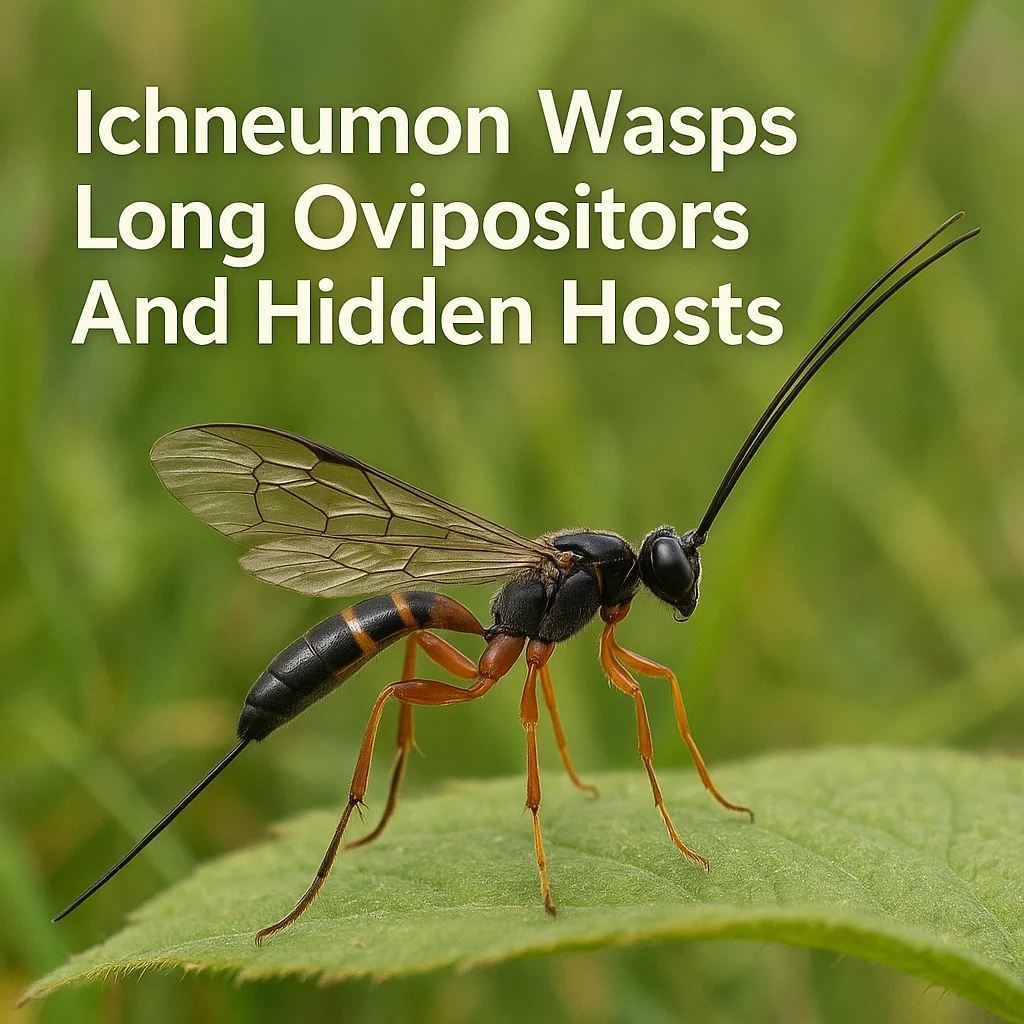
- Common names: Ichneumon wasps
- Scientific name: Varies (part of the Ichneumonidae family)
- Insect: Yes, they are invertebrates
- Order: Hymenoptera; Family: Ichneumonidae
- Typical size range: 3mm to over 5cm in length
- Key colors/patterns: Often black, brown, yellow, with some species showing bright reds and oranges
- Activity: Mostly diurnal (active during the day)
- Typical habitats: Forests, fields, gardens, and meadows
- Where in the world it occurs: Found worldwide, with the greatest diversity in temperate regions
- Seasonality: Adults are most visible in spring and summer months
🔍 Identification
Recognizing ichneumon wasps in the field can be intriguing due to their diverse family. They have slender bodies with distinctly elongated ovipositors, especially in females:
- Body shape: Slender and elongated, often with a distinctly tapered abdomen
- Antennae: Long and thread-like, sometimes appearing segmented
- Wing features: Transparent wings with well-defined venation
- Leg traits: Long, with some species showing prominent hind legs
- Distinguishing look-alikes: Sometimes confused with other wasps and large flies but can be identified by their long ovipositors
- Top ID Tips
- Look for their elongated body and narrow waist
- The ovipositor may be longer than the body itself
- Wing venation is distinct and complex
- They tend to hover and inspect trees and wood
- Colors vary but often feature muted earth tones
- Invasive in motion style, moving in search of host nesting sites
🧠 Basic Body Structure
Ichneumon wasps, like other insects, have a segmented body composed of a head, thorax, and abdomen. They possess three pairs of legs for movement and are equipped with an exoskeleton, which they periodically molt to grow. Wings are present in most adults, allowing for flight and search for habitats. They are invertebrate, which means they lack a backbone, a key characteristic of all insects.
🌍 Habitat & Distribution
Ichneumon wasps inhabit a variety of environments but are commonly found in forests, fields, gardens, and even urban areas. Preferring warm and temperate climates, they can often be found in microhabitats such as under bark, within leaf litter, or around the edges of bodies of water. Their geographic range is extensive, as they are found on all continents except Antarctica. Habitat changes, such as deforestation, can significantly affect sightings and local populations.
📅 Seasonal Appearance & Activity
These wasps are most active during the warmer months. Their visibility is highest in spring and summer, when they engage in mating and laying eggs. They are predominantly active during daylight hours and can be influenced by weather conditions like temperature and humidity.
- Best Time to Spot It
- Spring and early summer months
- Warm, sunny days when activity peaks
- During midday when temperatures are optimal
- After rainfall when humidity levels increase
🥚 Reproduction & Egg-Laying
Mating behaviors of ichneumon wasps often include complex courtship displays and pheromonal communication. Their most notable behavior is using their long ovipositors to deposit eggs into hidden hosts, such as the larvae of other insects found in wood or plant tissues. The number of eggs laid varies significantly by species and host availability.
🌀 Metamorphosis & Life Cycle
Ichneumon wasps undergo complete metamorphosis with distinct egg, larva, pupa, and adult stages. The larvae typically parasitize other insect larvae, consuming them from within. Development time through the larval stage can vary but often lasts several weeks or months, depending on environmental conditions and host availability. After pupating, they emerge as adults to begin the cycle anew.
🍽️ Diet & Feeding Behavior
Ichneumon wasp larvae are primarily parasitoids, feeding on the tissues of their host. As adults, they may feed on nectar, sap, and sometimes other insects, using their piercing-sucking mouthparts. They play a role as important biocontrol agents by managing the populations of pest insects.
🦉 Predators & Defense
Natural predators include birds, spiders, and other insectivores. Their defense strategies encompass a cryptic appearance that helps them blend into their environment, quick flight responses to evade capture, and in some cases, using their ovipositors defensively.
- Defense Highlights
- Cryptic coloration for camouflage
- Quick, evasive flight capabilities
- Defensive posturing with ovipositors
- Mimicry to resemble more dangerous insects
👥 Social Behavior & Swarms
Ichneumon wasps are primarily solitary. They do not form colonies or swarms, with their social interactions mainly occurring during mating encounters. Territory is not often aggressively defended, as each wasp seeks out hosts independently.
🧭 Senses & Communication
Ichneumon wasps rely on a combination of senses for communication and navigation. They use their keen sense of smell to detect chemical cues from potential hosts or mates, and they may also use visual cues to locate habitats and avoid predators.
🌱 Role in the Ecosystem
Ichneumon wasps are crucial in controlling pest populations, thus maintaining ecological balance. Their parasitism reduces numbers of potential pest species, aiding in natural pest control and impacting various ecosystems. Though interactions with humans are typically indirect, these wasps benefit agriculture through their role in pest management.
📉 Population & Conservation Notes
While ichneumon wasps are often reported as common in many habitats, specific populations may be affected by habitat loss, pesticide use, and climate change. Conservation efforts focus on preserving natural habitats and ensuring ecological diversity.
- How to Help (Low-Impact)
- Preserve natural habitats like woodlands and grasslands
- Plant native flora to support ecosystem diversity
- Avoid using chemical pesticides in gardens and fields
- Encourage natural garden features like ponds and woodpiles
⚠️ Human Interaction & Safety
Ichneumon wasps are generally harmless to humans. Their ovipositors are for egg-laying and are not typically used for defense against people. Although non-aggressive, if an individual experiences a bite or sting, it is advisable to wash the area and seek professional guidance if a severe reaction occurs. Observing these wasps respectfully in the wild promotes coexistence and understanding.
📌 Summary
- Recognizable by their long, slender bodies and ovipositors
- Found in diverse habitats worldwide, with high activity in warm months
- Undergo complete metamorphosis with parasitic larval stages
- Diet varies, but adults often feed on nectar while larvae consume host tissues
- Natural predators include birds and spiders, using camouflage for defense
- Largely solitary, interacting predominantly during breeding
- Play a significant role in pest control within ecosystems
- Population threats include habitat loss and pesticide exposure
- Safe around humans but respectful observation is encouraged