🕷️ Cuckoo Wasps Metallic ‘jewel' Wasps And Armor Plating
🧾 Quick Facts
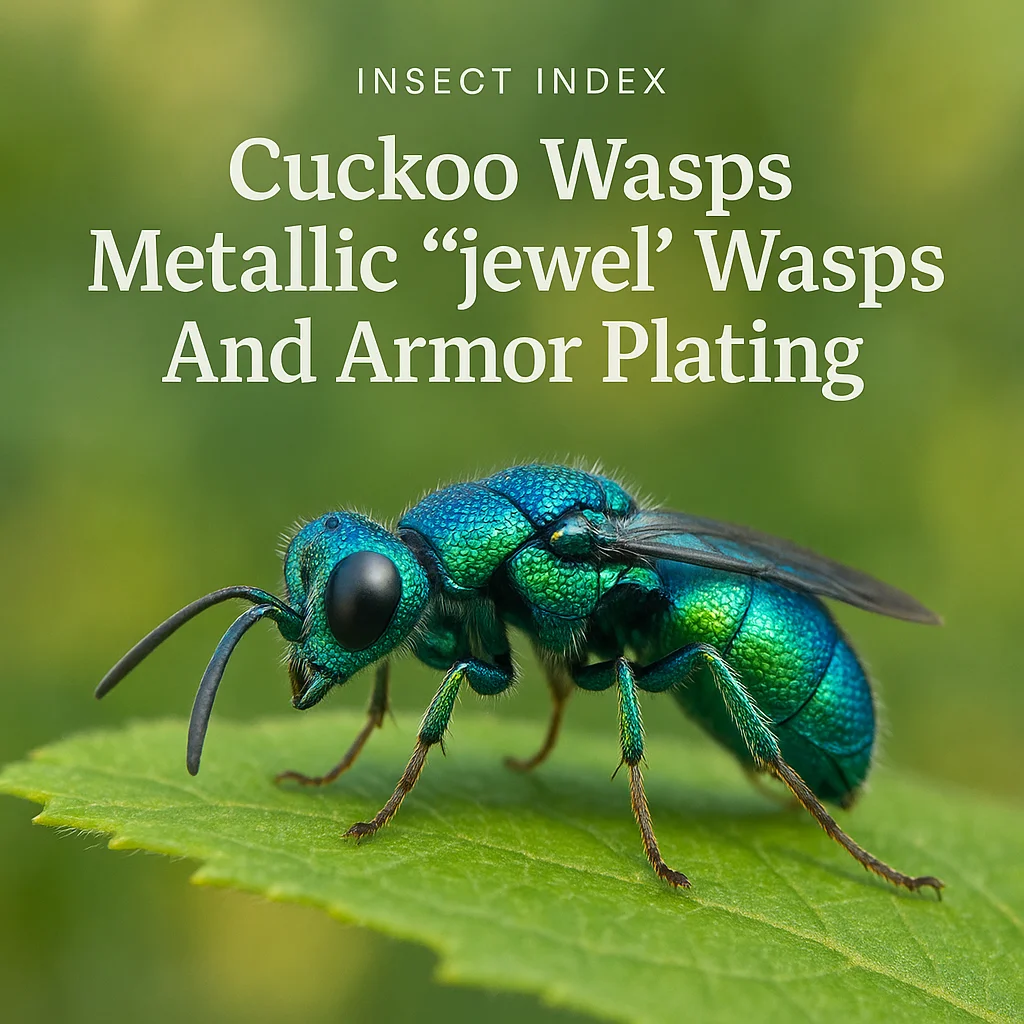
The Cuckoo Wasp, also known as Metallic ‘jewel’ Wasp due to their bright and metallic colors, belong to a fascinating group of insects known for their unique kleptoparasitic behavior. Here's a quick rundown of these captivating creatures:
- Common Names: Cuckoo Wasp, Jewel Wasp
- Scientific Name: Varies by species
- Insect or Not: Yes, they are invertebrates
- Order/Family: Hymenoptera / Chrysididae
- Typical Size Range: 2 to 18 millimeters in length (adults)
- Key Colors/Patterns: Iridescent blues, greens, and metallic hues
- Activity: Predominantly diurnal
- Typical Habitats: Gardens, forests, arid regions
- Where in the World: Found globally, especially in temperate and tropical regions
- Seasonality: Most visible in the warmer months
🔍 Identification
Cuckoo Wasps are small but striking due to their brilliant metallic colors. Here’s how to identify them in the field:
- Body Shape: Slender and compact with a noticeable, sometimes rounded abdomen
- Antennae: Short and segmented, often elbowed
- Wings: Transparent or lightly tinted, usually clear and without complex patterns
- Legs: Long enough for crawling rather than jumping, often used for clinging
- Distinguishing Features: Bright iridescent colors set them apart from other wasps
These wasps can sometimes be confused with certain flies or other brightly colored insects, but their rigid body and metallic hue give them away.
- Top ID Tips:
- Look for metallic colors glinting in the sun
- Observe their slow, crawling habits when searching for hosts
- Note their small size compared to other wasps
- Check for clear wings and a compact body
- Spot-on habitat, particularly near ground-level nests of other insects
- Listen for silence—not buzzing like bees
🧠 Basic Body Structure
The Cuckoo Wasp, like other insects, has a distinct body plan divided into three main parts: the head, thorax, and abdomen. Equipped with six legs, this insect is a model of structural simplicity yet remarkable functionality:
- Head: Houses sensory organs and mandibles
- Thorax: Bears the wings and legs, muscular for movement
- Abdomen: Contains vital reproductive organs
They are invertebrates, meaning they lack a backbone and instead have a durable exoskeleton. This exoskeleton provides necessary protection and support but requires periodic shedding, or molting, as the wasp grows.
🌍 Habitat & Distribution
Cuckoo Wasps are highly adaptable creatures, known to thrive in a variety of habitats. They can often be found in the following environments:
- Gardens and backyards, especially those with sandy soil
- Under bark and in woody debris
- Near solitary bee and wasp nests, where they lay eggs
Their geographic distribution is vast, yet they are particularly abundant in temperate and tropical climates across continents like North America, Europe, Asia, and Africa. Changes in habitat due to urbanization and agriculture can alter their sightings, as they are reliant on the presence of host insects.
📅 Seasonal Appearance & Activity
Cuckoo Wasps are most active during during warm weather when potential host insects are also active. Sightings are most likely during:
- Spring through early autumn
- Daytime, as they are diurnal
- Warm, sunny days with less wind
- Periods just after rain when hosts are present
🥚 Reproduction & Egg-Laying
The reproductive behavior of Cuckoo Wasps is unique and specialized. Females seek out the nests of solitary bees and wasps to lay their eggs. Upon locating a suitable host nest, a Cuckoo Wasp will carefully deposit an egg while avoiding detection. This egg-laying habit earns them the "cuckoo" moniker.
Typical egg counts are low, as Cuckoo Wasps rely on host provisions; precise egg counts vary based on region and available hosts.
🌀 Metamorphosis & Life Cycle
Cuckoo Wasps undergo complete metamorphosis, which includes four distinct stages: egg, larva, pupa, and adult.
Egg: Laid in another insect's nest, often solitary bee or wasp nests.
Larva: After hatching, the young wasp larva consumes the host’s provisioned food, sometimes the host larva itself, to complete its development.
Pupa: The larva enters a developmental rest stage, securely within the host nest, leading to transformation into an adult.
Adult: Emerges capable of flight and reproductive maturity, restarting the cycle.
Exact durations of each stage can vary based on environmental conditions and geographic location.
🍽️ Diet & Feeding Behavior
Cuckoo Wasps have different feeding habits that align with their life stages:
- Larvae: Feed on stored pollen/nectar and sometimes the host larvae
- Adults: Primarily feed on nectar or nothing at all, as feeding can be limited
Equipped with chewing mouthparts, they can consume pollen and nectar efficiently. Their role as kleptoparasites means they predominantly rely on hosts to provide for their young.
🦉 Predators & Defense
Cuckoo Wasps face several natural enemies, such as birds, spiders, and reptiles. However, they have developed a suite of defense strategies:
- Thick exoskeleton that offers armor-like protection
- Blending into surroundings through iridescent colors
- Ability to curl up into a defensive ball-like shape
These defenses provide protection against predators and challenging environmental conditions.
- Defense Highlights:
- Armor-like exoskeleton
- Camouflage through brilliant colors
- Ability to roll into a ball for defense
- Utilization of host’s nest as a refuge
👥 Social Behavior & Swarms
Cuckoo Wasps are primarily solitary creatures. They do not form colonies or swarms like some other wasp species. Their interactions are mostly limited to mating and host location. Their solitary nature involves minimal social behavior apart from necessary mating encounters.
🧭 Senses & Communication
Cuckoo Wasps rely on highly developed senses to locate hosts and potential mates:
- Vision: Acute sensory vision to aid in navigation and host identification
- Smell: Use of olfactory cues to detect host nests
- Touch: Sensory hairs to navigate and interact with surroundings
Communication is mostly non-vocal, involving pheromone signals and visual cues critical for mating and host detection.
🌱 Role in the Ecosystem
Cuckoo Wasps play a subtle yet crucial role in ecosystems:
- Pollination: Occasional pollinator when visiting flowers for nectar
- Population Control: Natural control of solitary bee and wasp populations
By parasitizing hosts, they impact population dynamics, contributing to biodiversity and ecological balance.
📉 Population & Conservation Notes
While Cuckoo Wasps are not on any widespread conservation watchlists, their abundance is influenced by habitat health and availability of host species. Habitat conversion and pesticide use could impact local populations.
- How to Help (Low-Impact):
- Plant native flowering plants to support insect biodiversity
- Avoid pesticide use in gardens
- Maintain natural, undisturbed areas
- Encourage solitary bee and wasp presence for ecosystem balance
⚠️ Human Interaction & Safety
Cuckoo Wasps are primarily harmless to humans and do not sting unless handled roughly, and even then, their sting is mostly inconsequential. If stung, clean the area, avoid scratching, and seek professional advice if a severe reaction occurs. Observing them respectfully in the wild without collection is highly encouraged to maintain ecological health.
📌 Summary
- Identifiable by their iridescent, metallic body
- Common in temperate and tropical regions
- Visible during warm, sunny days
- Larval stage parasitizes host nests
- Adults feed primarily or exclusively on nectar
- Defense includes hard exoskeleton and curling behavior
- Primarily solitary with occasional interactions during mating
- Important ecological roles in pollination and insect population control