🕷️ Hornet Vs Yellowjacket Nests Paper Texture And Locations
🧾 Quick Facts
Hornets and yellowjackets are often confused due to their similar appearance and nesting behaviors. Both belong to the wasp family and are known for their paper-like nests. Understanding these insects can help identify them and reduce unwanted encounters.
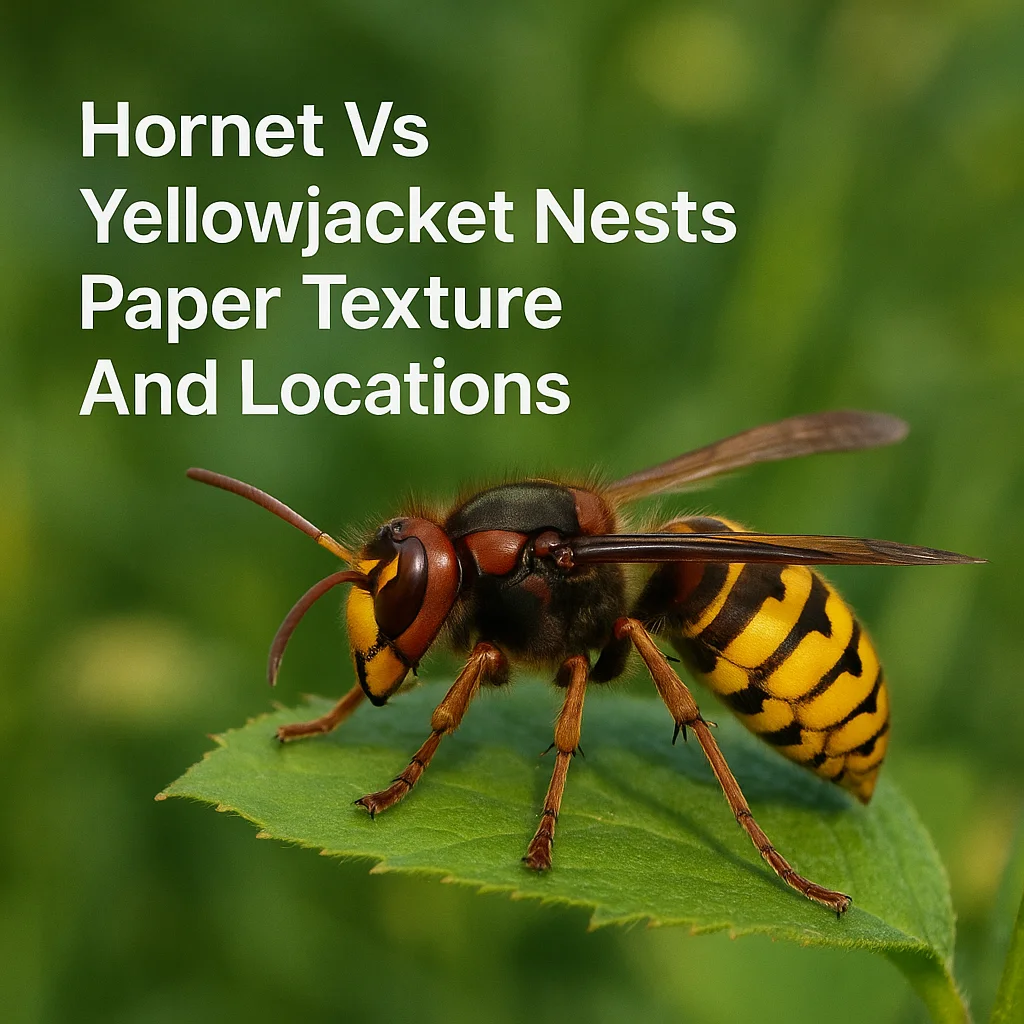
- Common names: Hornet, Yellowjacket
- Scientific name: Varies (depends on species, e.g., Vespa for hornets, Vespula for yellowjackets)
- Insect: Yes, these are invertebrates
- Order / family: Hymenoptera / Vespidae
- Typical size range (adult): 1/2 to 1 inch (13 to 25 mm)
- Key colors/patterns: Black and yellow bands, with some hornets having white markings
- Activity: Primarily diurnal
- Typical habitats: Forests, fields, urban and suburban areas
- Where in the world it occurs: Temperate regions of the world, including North America, Europe, and Asia
- Seasonality: Most active in late spring through summer into early autumn
🔍 Identification
Hornets and yellowjackets can be recognized by their robust bodies, bright coloration, and distinct paper nests. Hornets are generally larger and may have more subdued colors compared to the more vivid yellowjackets.
- Body shape and silhouette: Cylindrical abdomen, narrow waist
- Antennae type: Long and segmented; hornets have thicker antennae
- Wing features: Transparent wings with prominent veins
- Leg traits and movement style: Long legs, known for fast and agile flight
- Distinguishing look-alikes: Often confused with bees due to their coloration but lack the furry appearance
- Top ID Tips:
- Check body size: hornets are usually larger
- Observe the nesting site: yellowjackets typically nest underground
- Look for color patterns: yellowjackets have vibrant yellow and black bands
- Note any aggression: yellowjackets are more aggressive when provoked
- Listen for sound: buzzing is consistent but less intense than bees
- Identify based on activity: more visible in daylight
🧠 Basic Body Structure
Hornets and yellowjackets, like all insects, have a body divided into three main sections: the head, thorax, and abdomen. They possess six legs, two pairs of wings, and an exoskeleton that provides protection. As invertebrates, they lack a spinal column, instead having an outer shell. They undergo molting as they grow.
🌍 Habitat & Distribution
These wasps are adaptable to various environments, from dense forests to cultivated gardens. They build nests in sheltered areas under eaves, inside trees, or underground for yellowjackets. Their presence in urban areas is often due to the availability of food sources. They inhabit temperate regions across the globe, with different species preferring specific climates
📅 Seasonal Appearance & Activity
Hornets and yellowjackets are most commonly seen in the warmer months, from late spring to early fall when they are actively foraging for food to sustain their colonies. Their activity dampens as temperature drops.
- Best Time to Spot It:
- Warm, sunny days
- During daylight hours (diurnal activity)
- Late spring and throughout the summer
- Early autumn before the first frosts
🥚 Reproduction & Egg-Laying
Hornets and yellowjackets have fascinating reproductive behaviors marked by single queens establishing new colonies each spring. Pheromones aid in attracting males for mating followed by a solitary period when fertilized queens lay eggs in secluded nests.
Eggs are laid in individual cells within the nest structure, with numbers ranging greatly depending on environmental conditions and species. Observations show yellowjacket nests grow larger than those of hornets.
🌀 Metamorphosis & Life Cycle
These wasps undergo complete metamorphosis, transitioning through egg, larva, pupa, and adult stages. Eggs hatch into larvae that are diligently fed by worker wasps. The larval stage is a period of rapid growth sustained by proteins from prey insects.
The pupal stage involves cocoon formation, during which transformation occurs. Adult wasps emerge resuming roles as reproducers, foragers, or defenders depending on their caste. A full cycle can be completed in a few weeks during favorable conditions.
🍽️ Diet & Feeding Behavior
Hornets and yellowjackets exhibit carnivorous tendencies in larval stages, primarily consuming insects and other meat sources. Adults, however, shift towards a diet rich in sugars sourced from flower nectar, fruit, and tree sap. Their feeding activities make them efficient pollinators but also pests when scavenging from human food sources. Equipped with strong mandibles, they can chew through food and other substances with ease.
🦉 Predators & Defense
These wasps face natural threats from a variety of predators, including birds, reptiles, and mammals. Predation pressures have fostered formidable defenses such as stings capable of deterring many would-be attackers. Bright warning coloration also serves to alert others of their potent sting.
- Defense Highlights:
- Powerful sting for defense
- Sharp mandibles for fighting
- Bright warning colors
- Group defense via swarming
👥 Social Behavior & Swarms
Both hornets and yellowjackets are social insects living in colonies with structured roles—queens, workers, and drones. Cooperation and communication are key, with pheromone trails leading new recruits to sources of food. Swarming behavior is usually triggered when defending their nest or, occasionally, when large food sources are encountered.
🧭 Senses & Communication
Hornets and yellowjackets are equipped with keen senses to navigate and communicate. They rely heavily on smell and pheromone signals to organize colony activities and identify food sources. Vision, though not as sharp as human sight, aids in detecting movements, while touch and vibrations inform them of their immediate surroundings.
🌱 Role in the Ecosystem
As both predators and pollinators, hornets and yellowjackets play complex roles. They help control pest populations by preying on insects detrimental to crops. Additionally, they contribute to pollination as they forage for nectar. However, their nests can sometimes cause conflicts with humans, especially when close to inhabited areas.
📉 Population & Conservation Notes
Hornets and yellowjackets remain common in many regions, but their abundance is sensitive to ecological changes. Habitat loss, pesticides, and climate change are impactful factors. Local populations fluctuate depending on available resources and environmental constraints.
- How to Help (Low-Impact):
- Encourage native flora in gardens
- Avoid using harmful pesticides
- Maintain natural habitats when possible
- Provide water sources
⚠️ Human Interaction & Safety
Although typically non-aggressive, hornets and yellowjackets can sting defensively when their nests are threatened. If stung, it is advisable to wash the area with soap and water and avoid scratching. Seek professional medical advice if severe allergic reactions occur.
Respectful observation minimizes risks, and nests should not be disturbed. Collection for study should be avoided to conserve local ecosystems.
📌 Summary
- Hornets and yellowjackets are similar but distinct wasps found globally.
- Nests made of a paper-like substance are clues to their presence.
- They prefer warm, temperate climates and are active during daylight.
- It's crucial to recognize their ecological roles as predators and pollinators.
- Avoid direct contact to prevent stings; observe respectfully.
- Maintain biodiversity by conserving habitats and reducing pesticide use.