🕷️ Hornet nest structure: inside a colony
🧾 Quick Facts
Hornet nests are fascinating structures that house complex colonies. They are primarily built by social wasps and are notable for their unique layered design and communal living dynamics.
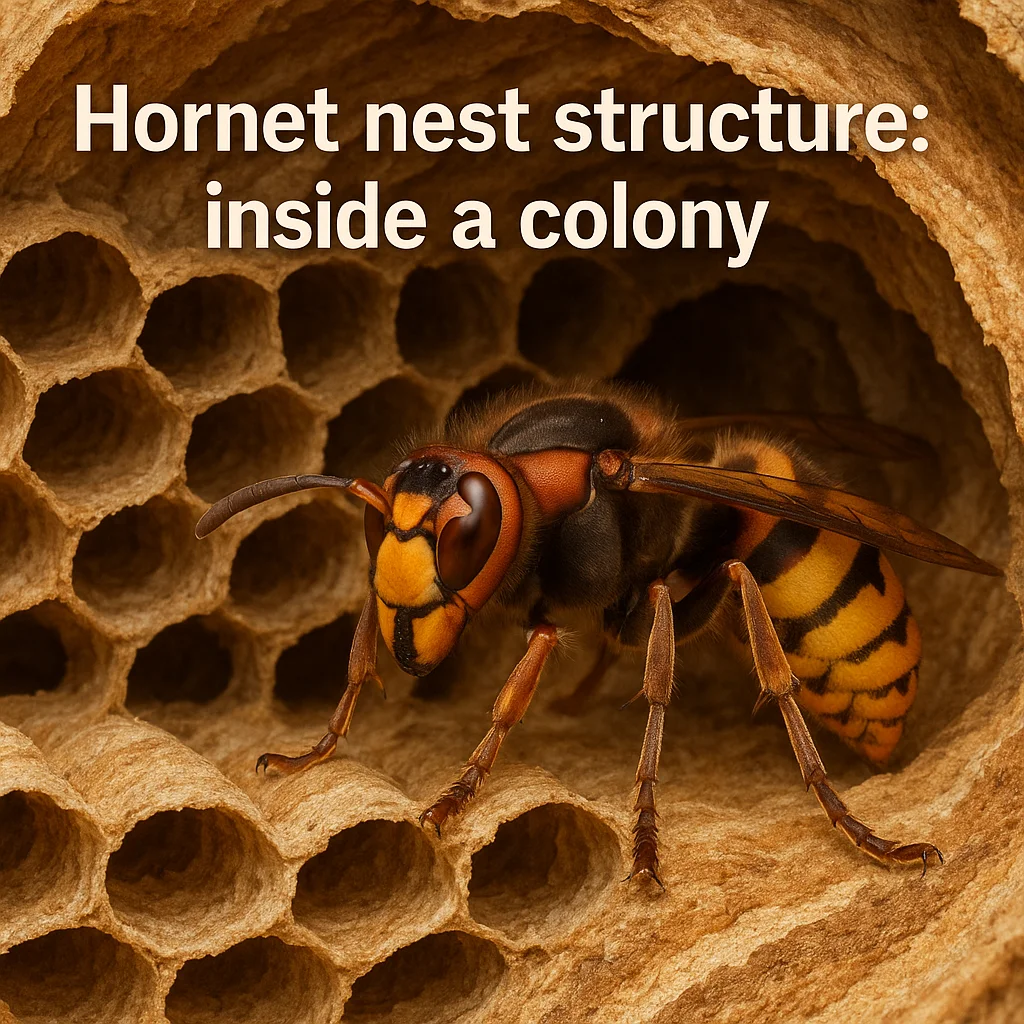
- Common names: Hornets
- Scientific name: Varies by species (e.g., Vespa crabro)
- Insect or not: Yes, they are insects
- Order / family: Hymenoptera / Vespidae
- Typical size range: Adults range from 2.5 to 4 cm in length
- Key colors/patterns: Black, yellow, brown, and sometimes red with distinctive banding
- Activity: Generally active during the day
- Typical habitats: Forests, gardens, urban areas
- Where in the world it occurs: Mostly in temperate and tropical regions
- Seasonality: Most active in late spring through early autumn
🔍 Identification
Hornets can be recognized by their robust bodies and prominent mandibles. They possess long antennae and broad wings. The abdomen is banded with a characteristic color pattern that distinguishes them from similar insects like bees.
- Body shape: Robust with a narrow waist
- Antennae: Long and slightly curved
- Wings: Large, clear, and folded during rest
- Leg traits: Strong legs, capable of grasping
- Look-alikes: Often confused with bees and wasps, but generally larger in size
- Top ID Tips:
- Check for size and robust body shape
- Note the banding pattern on the abdomen
- Observe wing folding at rest
- Identify by long antennae with a slight curve
- Listen for distinct buzzing sound
- Compare with bee's smaller size and hairier body
🧠 Basic Body Structure
As insects, hornets are characterized by having three main body segments: the head, thorax, and abdomen. They have six legs and feature an exoskeleton that provides structural support and protection. Hornets undergo molting as they grow, shedding their exoskeleton to form a new, larger one. The presence of wings allows them to fly efficiently.
Hornets are invertebrates, meaning they lack an internal skeleton or backbone. They rely on their exoskeleton for both strength and flexibility.
🌍 Habitat & Distribution
Hornets typically prefer wooded areas but are also adapted to suburban and urban environments. Nests are often found in tree branches, attics, and sometimes underground. The geographic range of hornets includes Europe, Asia, and parts of North America. They thrive in temperate climates but can also adapt to tropical environments.
Habitat alterations can impact hornet populations, with urbanization often leading to increased sightings as they adapt to new environments.
📅 Seasonal Appearance & Activity
Hornets are most visible during warmer months. They are primarily diurnal, being active during daylight hours when temperatures are moderate. Rainfall and higher humidity can increase activity levels as they seek out food and nesting materials.
- Best Time to Spot It:
- Late spring through early autumn
- Midday on sunny days
- Post-rainfall when humidity is high
- During mild weather conditions
🥚 Reproduction & Egg-Laying
In hornet colonies, the queen hornet is responsible for laying eggs. Mating typically occurs after swarming, with new queens fertilized by drones. Eggs are laid in hexagonal cells within the nest, with workers caring for developing larvae. Egg counts can vary significantly, depending on the size and age of the colony.
Eggs are usually laid in protected areas of a constructed nest, which offers safety and suitable conditions for development.
🌀 Metamorphosis & Life Cycle
Hornets undergo complete metamorphosis, progressing through the stages of egg, larva, pupa, and adult. Larvae hatch from eggs and are tended to by worker hornets. They feed on pre-digested insects provided by adults. The larval stage lasts for several weeks before pupating within the comb structure of the nest.
Pupae develop into adult hornets and emerge to take on roles within the colony. The full life cycle can last from several weeks to months, with variability based on environmental conditions.
🍽️ Diet & Feeding Behavior
Hornets are predatory insects, primarily feeding on other insects like flies, caterpillars, and aphids. Adults have powerful mandibles for capturing and chewing prey. They also consume nectar and fruit juices, playing a minor role in pollination.
Their feeding behavior contributes significantly to controlling pest populations, thus maintaining balance in ecosystems.
🦉 Predators & Defense
Hornets face predation from various animals such as birds, reptiles, and mammals. They employ multiple defense strategies including sting delivery, chemical deterrents, and aggressive group defense. Their bright colors often signify danger, deterring potential predators.
- Defense Highlights:
- Potent sting with venom
- Group defense against threats
- Chemical deterrent release
- Warning coloration for predators
👥 Social Behavior & Swarms
Hornets are social insects living in colonies with distinct roles. The queen, workers, and males (drones) each have specific duties that ensure colony survival. Communication within swarms occurs through pheromones and visual signals. Swarming behavior often results from colony maturation and new queens seeking to establish new nests.
Swarms can be triggered by environmental pressures or the need to locate new nesting sites.
🧭 Senses & Communication
Hornets rely heavily on their keen sense of smell for communication via pheromones. Their visual acuity supports navigation and threat detection. Tactile communication occurs through antennae touching. Vibrational signals are used within colony structures, aiding in coordination and alerting fellow hornets to danger.
🌱 Role in the Ecosystem
Hornets play a crucial role in ecosystems as both predators and scavengers. By controlling insect populations, they help balance ecosystems, preventing pest outbreaks. They also contribute to pollination and nutrient cycling through decomposition processes.
While occasional conflicts arise with humans, hornets also provide benefits by reducing agricultural pests.
📉 Population & Conservation Notes
Hornet populations are often common in suitable habitats, but threats like habitat loss, pesticide use, and climate change can impact specific species. Local abundance varies widely, with some regions observing declines related to environmental changes.
- How to Help (Low-Impact):
- Plant native vegetation to support food sources
- Avoid the use of chemical pesticides
- Support conservation of wooded areas
- Encourage natural pest control methods
⚠️ Human Interaction & Safety
Hornets can sting when provoked, with stings being potentially painful and causing allergic reactions in sensitive individuals. It is advised to wash sting areas with soap and water, avoid scratching, and seek professional advice if a severe reaction occurs. Observing hornets from a distance and not disturbing nests is recommended to minimize interactions.
📌 Summary
- Hornets are robust, social insects with a distinct banding pattern.
- They thrive in a variety of habitats, including urban areas.
- Most active during warmer months, typically during the day.
- Undergo complete metamorphosis in life cycle stages.
- Predators include birds and mammals, utilize stinging for defense.
- Ecologically significant as predators and nutrient cyclers.
- Conservation depends on habitat preservation and pesticide reduction.
- Interact cautiously due to potential stings; admire from a safe distance.