🕷️ Cuckoo Bees Parasites Of Other Bees Simple Overview
🧾 Quick Facts
Cuckoo bees are fascinating insects known for their parasitic behavior, specifically targeting other bee species. They play a unique role in ecosystems and display intriguing adaptations for survival.
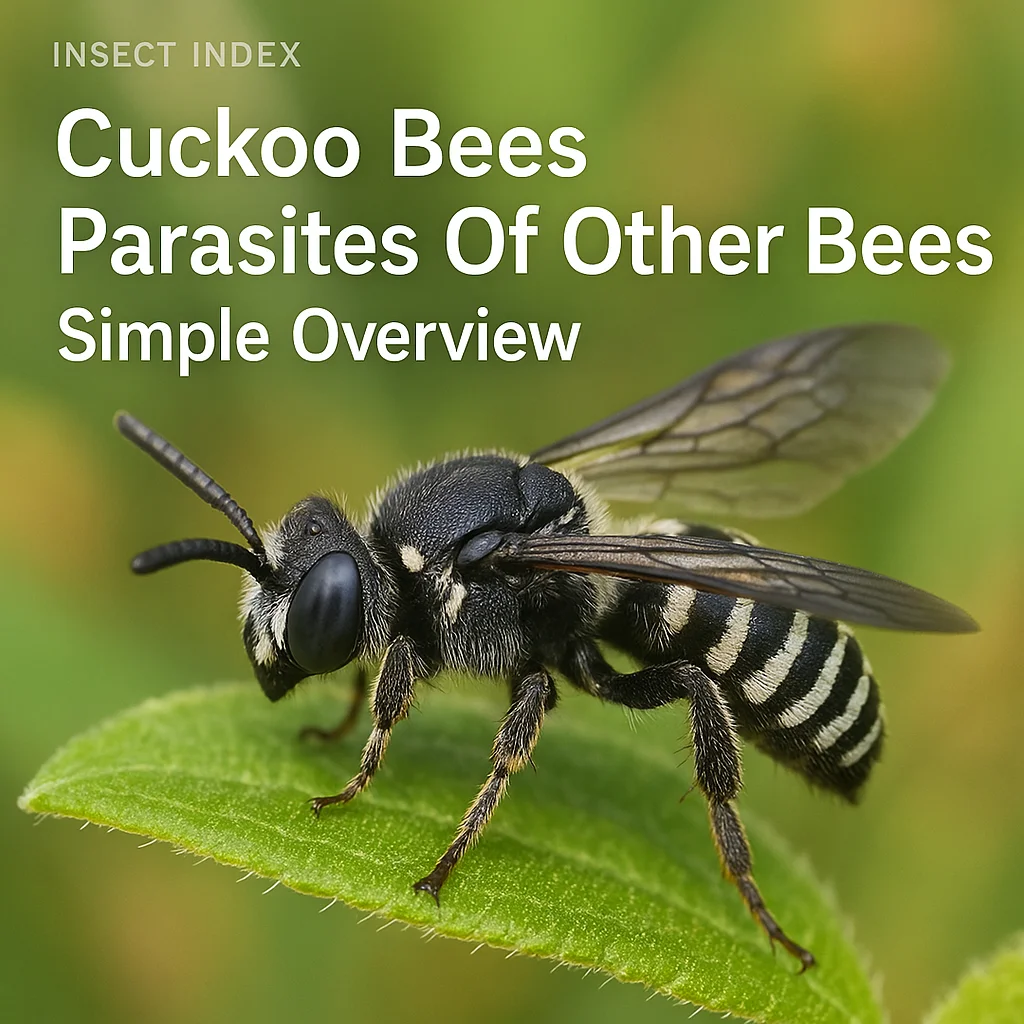
- Common names: Cuckoo bee
- Scientific name: Varies
- Insect or not: Yes, invertebrate (insect)
- Order / family: Hymenoptera / Apidae (varies)
- Typical size range: 6–14 mm (adult)
- Key colors/patterns: Often black, metallic, or patterned with fine hairs
- Activity: Primarily diurnal
- Typical habitats: Meadows, gardens, forests
- Where in the world it occurs: Worldwide, except extreme polar regions
- Seasonality: Spring to late summer, varies by latitude
🔍 Identification
Cuckoo bees can be recognized by their sleek bodies, often with a metallic sheen, and absence of pollen-carrying structures typical of other bees. They have slender antennae, and their wings display typical venation seen in non-parasitic bees.
- Body shape is narrow and may appear wasp-like
- Antennae are usually filiform and not overly long
- Wings are often clear with visible venation patterns
- Legs are not equipped for pollen collection
- Often mistaken for wasps due to slender body and behavior
- Top ID Tips:
- Look for a lack of pollen baskets on legs
- Check for metallic colors or patterns
- Observe their infiltration behavior near bee nests
- Notice activity around host bee species
- Note slender, wasp-like appearance
🧠 Basic Body Structure
As insects, cuckoo bees have a three-part body: head, thorax, and abdomen. They possess six legs and a hard, protective exoskeleton. Like all bees, they have wings, allowing them to fly. Cuckoo bees are invertebrates, meaning they lack a backbone, and instead rely on their exoskeleton for structural support and protection.
🌍 Habitat & Distribution
Cuckoo bees thrive in a variety of habitats where their host bees are found. These include meadows, gardens, and forest edges. They can often be found in microhabitats like under leaves or near flowers frequented by their host species. Globally, they are present in most continental regions, except the most extreme polar climates. Habitat loss and changes can impact sightings, making conservation efforts important in maintaining populations.
📅 Seasonal Appearance & Activity
Cuckoo bees are most active during the warmer months of the year, typically from spring through late summer. They are diurnal, meaning they are active during the day, often in warm, sunny weather. Wetter or cooler conditions may decrease their activity.
- Best Time to Spot It:
- Spring through late summer
- On dry, sunny days
- Mid-day when temperatures peak
- Around flowers and host bee nests
🥚 Reproduction & Egg-Laying
Cuckoo bees have a unique reproductive strategy, laying their eggs in the nests of other bees. After the host bee has completed its nest, a female cuckoo bee infiltrates and lays her eggs. Typically, eggs are laid in cavities, hollow stems, or underground burrows prepared by the host bees, with clutch sizes varying widely depending on species.
🌀 Metamorphosis & Life Cycle
Cuckoo bees undergo complete metamorphosis, which includes the stages of egg, larva, pupa, and adult. The larvae feed on the pollen provisions stored by the host bee or on the host larvae itself. This life cycle stage is spent in the nest of the host bee.
After pupating within their host's nest, cuckoo bees emerge as adults ready to repeat the cycle. The duration of each stage varies, often depending on environmental conditions and availability of host nests.
🍽️ Diet & Feeding Behavior
Adult cuckoo bees primarily feed on nectar, using their mouthparts adapted for sipping. As larvae, they consume the food stores of their host bees, which include pollen and nectar, and sometimes even the host's own larvae or eggs. Cuckoo bees do not play a primary role as pollinators due to their parasitic lifestyle, though adult nectar feeding may indirectly contribute to pollination.
🦉 Predators & Defense
Cuckoo bees face predation from birds, spiders, and larger insects. Their defenses include mimicry, where they resemble more aggressive or unpalatable insects, and the ability to quickly escape from threats. Their tough exoskeleton also provides some protection from physical attacks.
- Defense Highlights:
- Mimicry of wasp species
- Quick flight to escape predators
- Camouflaged coloring
- Tough exoskeleton
👥 Social Behavior & Swarms
Cuckoo bees are solitary insects with no colony structures. Each female independently finds host nests for egg-laying and does not participate in social activities or form swarms. Their interactions are limited to mating and opportunistic encounters with host nests.
🧭 Senses & Communication
Like other bees, cuckoo bees rely heavily on their sense of vision and smell. They use these senses to locate host nests and suitable locations for laying eggs. Communication occurs primarily through chemical signals, such as pheromones, which may play a role in mating.
🌱 Role in the Ecosystem
Cuckoo bees are integral to balancing ecosystems by indirectly influencing the population dynamics of other bee species. While their parasitic nature can negatively impact host populations, they help control populations naturally and contribute to biodiversity. Their presence indicates a functioning ecosystem with a variety of bee species.
📉 Population & Conservation Notes
While cuckoo bees are often found where host species thrive, their populations are vulnerable to declines in host bee populations. Habitat loss, pesticide use, and climate change are pressing threats. Protecting habitats and promoting biodiversity-friendly practices can help support their populations.
- How to Help (Low-Impact):
- Plant native flowers
- Reduce pesticide use
- Maintain bee-friendly habitats
- Protect habitats from development
⚠️ Human Interaction & Safety
Cuckoo bees are generally harmless to humans and are unlikely to sting unless directly provoked. Observing them can be a rewarding experience, and it is essential to approach them with respect, avoiding disturbance to their host nests.
If a sting occurs, wash the area with soap and water, avoid scratching, and seek professional advice if a severe reaction occurs. It's crucial to minimize interference and refrain from collecting wild specimens.
📌 Summary
- Identification: Narrow, wasp-like appearance, no pollen baskets
- Habitat: Open areas like meadows and gardens
- Seasonality: Visible from spring to late summer
- Life cycle: Complete metamorphosis (parasitic in host nests)
- Diet: Adults feed on nectar; larvae consume host provisions
- Predators: Birds, spiders, other insects
- Ecological role: Indirect pollinators, ecosystem balancers
- Human interaction: Minimal risk, beneficial observers