🕷️ How ants shape ecosystems (seed dispersal)
🧾 Quick Facts
Ants play a pivotal role in ecosystems, particularly through the process of seed dispersal. Though various species contribute differently, the collective influence of ants is undeniable across many habitats.
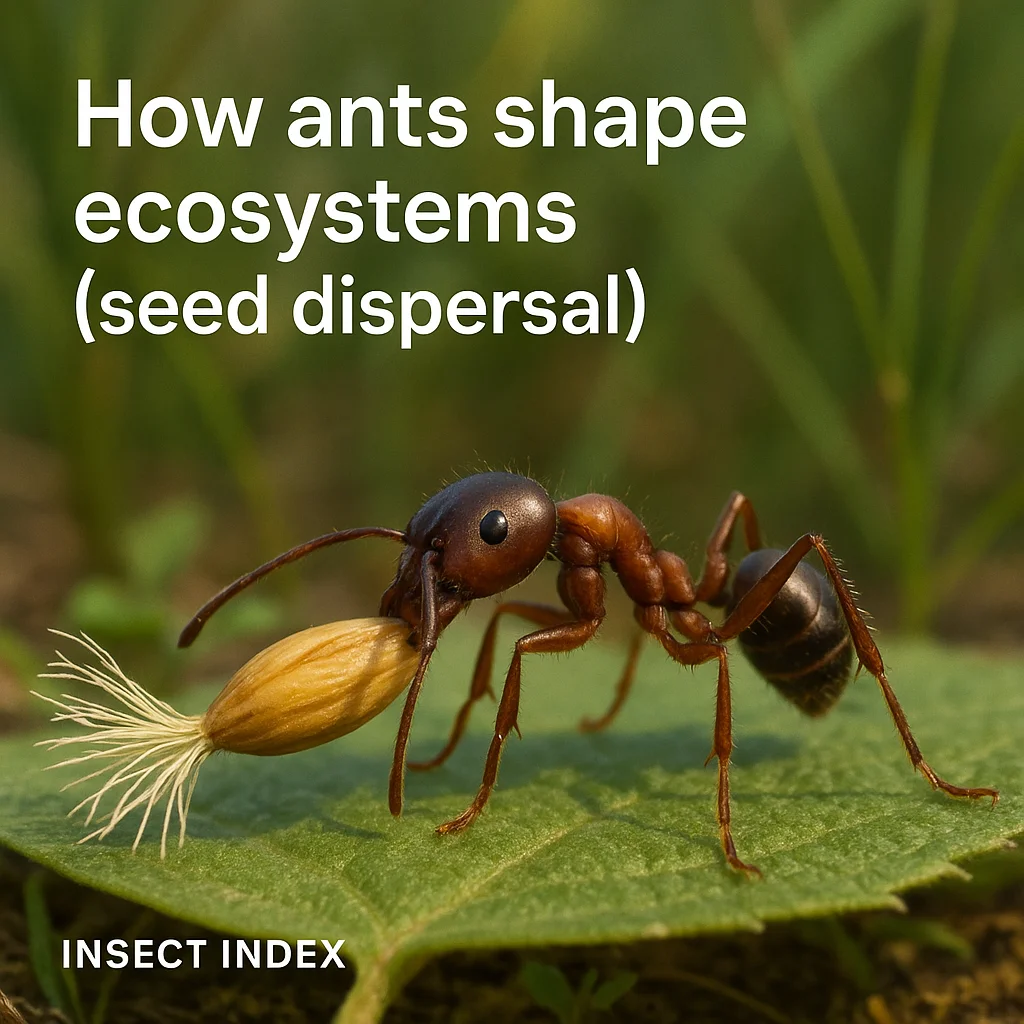
- Common names: Ants
- Scientific name: Varies by species
- Insect or not: Yes, they are invertebrates and classified as insects
- Order / family: Hymenoptera, Formicidae
- Typical size range: 2mm to 25mm
- Key colors/patterns: Black, brown, red, some with distinct markings in regions
- Activity: Mostly diurnal; some nocturnal species exist
- Typical habitats: Forests, grasslands, deserts, urban areas
- Where in the world it occurs: Globally, except Antarctica
- Seasonality: Visible year-round in tropics; spring to fall in temperate zones
🔍 Identification
Recognizing ants involves examining their segmented bodies and behavior within their environment. They're equipped with distinct features that make identification possible.
- Body shape and silhouette: Compact, segmented body with constriction between thorax and abdomen (petiole)
- Antennae type: Elbowed antennae, crucial for scent detection
- Wing features: Present only in reproductive members (queens and males), with two pairs of wings
- Leg traits and movement style: Six jointed legs that facilitate rapid, coordinated movement
- Distinguishing look-alikes: May be mistaken for termites or wasps, but ants have constricted waists and elbowed antennae
- Top ID Tips
- Look for elbowed antennae
- Check for a petiole between thorax and abdomen
- Observe their social behavior as many species are colonial
- Note different castes (workers, queens, males) by size and wing presence
- Identify color variations by geographic location
- Distinguish from termites by narrow waists
- Consider habitat context for accurate ID
🧠 Basic Body Structure
Ants, like all insects, possess a body divided into three primary segments: the head, thorax, and abdomen. They have six legs attached to the thorax and possess an exoskeleton, which they molt to grow. Winged individuals are exclusively reproductive members within their colonies. As invertebrates, ants lack a backbone, but their exoskeleton provides the necessary structural support.
🌍 Habitat & Distribution
Ants thrive in a diverse range of environments, from dense forests to arid deserts. They occupy specific microhabitats like under rocks, within leaf litter, and in sandy soils, showing adaptability to different niche environments. Found on every continent except Antarctica, they demonstrate remarkable resilience across climates, from tropical to temperate. Changes in habitat, like urban development or deforestation, can influence local ant populations significantly.
📅 Seasonal Appearance & Activity
Ants are most active during warmer months when temperatures are conducive to their metabolic processes. Their activity peaks during daytime, although some nocturnal species exist. Weather conditions like rain can trigger nest-building and foraging activities.
- Best Time to Spot It
- Spring and summer in temperate regions
- Year-round activity in tropical climates
- After rain showers
- During sunny mornings and afternoons
🥚 Reproduction & Egg-Laying
Ant reproduction involves elaborate mating rituals typically carried out during nuptial flights, where males and queens take to the air to mate. Post-mating, queens shed their wings and establish new colonies. Eggs are laid in the safety of a nest, varying in count from hundreds to thousands depending on species and caste responsibilities.
🌀 Metamorphosis & Life Cycle
Ants undergo complete metamorphosis, progressing through egg, larva, pupa, and adult stages. Eggs hatch into larvae, which are fed by worker ants until pupation. The pupal stage can last from weeks to months, varying widely by species and environmental conditions.
During the larval stage, ants rely on workers for nutrition and development. Once they transition to the pupal stage, changes occur internally, culminating in the emergence of adult ants equipped for their roles within the colony.
🍽️ Diet & Feeding Behavior
Ant diets are highly variable, encompassing seeds, sugars, and proteins. Their feeding tools include strong mandibles for carrying and chewing. Ants can be herbivores, predators, scavengers, and even decomposers, playing diverse roles within the ecosystem.
🦉 Predators & Defense
Natural enemies of ants include birds, reptiles, amphibians, spiders, and parasitoid wasps. To defend themselves, ants employ strategies like chemical defenses (formic acid), biting, and living in large, cooperative groups that can quickly mount a collective defense. Some species even possess armor-like exoskeletons for added protection.
- Defense Highlights
- Chemical secretions deter predators
- Cooperative defense mechanisms
- Some species have stingers
- Biting with strong mandibles
- Building fortified nests
👥 Social Behavior & Swarms
Ants are highly social, living in structured colonies with roles like workers, queens, and drones. They communicate through chemical signals (pheromones), performing complex tasks such as foraging and defending the colony. Swarming behaviors, particularly during mating, are triggered by environmental cues like temperature and humidity changes.
🧭 Senses & Communication
Ants possess acute senses of smell, essential for detecting pheromones. Their communication largely depends on these chemical signals, which they use to leave trails, send alerts, and organize group activities. Other senses include touch and vibration, which play vital roles in their social interactions.
🌱 Role in the Ecosystem
Ants are ecological powerhouses, impacting ecosystems through pollination, decomposition, and soil aeration. Their role in seed dispersal supports plant diversity, while their predation on pest species contributes to natural pest control. Ants engage in mutualistic relationships with plants and other insects, enhancing biodiversity and ecological stability.
📉 Population & Conservation Notes
Ant population status varies widely; they are often abundant in suitable habitats, but factors like habitat loss, pesticide use, and climate change can impact their numbers. Conservation efforts focus on maintaining healthy ecosystems, which naturally support diverse ant communities.
- How to Help (Low-Impact)
- Plant native species to support habitat
- Reduce pesticide use
- Maintain leaf litter in gardens
- Promote urban gardens with diverse flora
⚠️ Human Interaction & Safety
Ants generally pose minimal danger to humans. Some species bite or sting in defense, but these interactions rarely cause serious harm. In case of bites, wash the area with soap, avoid scratching, and seek professional advice if reactions are severe. Observing ants respectfully without disturbing their natural behaviors is encouraged.
📌 Summary
- Ants are identifiable by their elbowed antennae and segmented bodies
- They inhabit diverse environments and are globally distributed
- Activity peaks during warm, sunny conditions
- Complete metamorphosis governs their life cycle
- Varied diets and ecological roles such as seed dispersal
- Natural enemies include birds and other insects
- Important ecological roles in pollination and pest control
- Human safety involves simple first aid for bites